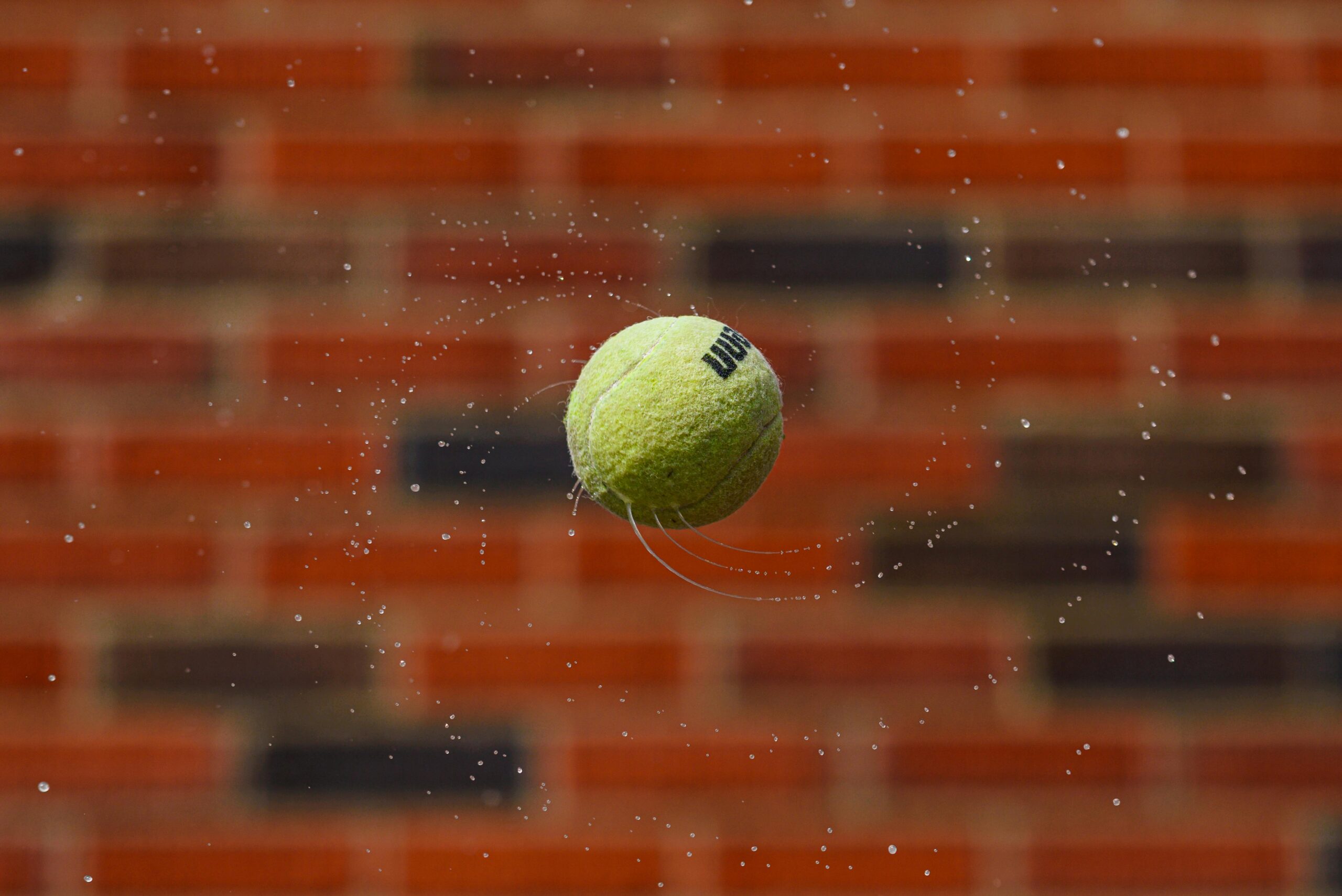
The first time one stands outside a padel court, perhaps at the humid edges of the Miami Beach Convention Center or under the iconic, salty breeze of Venice Beach, the sound is what lingers longest. It is a distinct, resonant thud—a hollow pop that echoes differently than the ping of a tennis ball or the sharp clack of a pickleball paddle. It is the sound of carbon fiber meeting a pressurized ball at high velocity, a sound that has defined the professional life of Fernando Belasteguín for three decades. To understand padel in 2026, one must understand that this sound is not merely a byproduct of sport but the heartbeat of a global movement that is currently colonizing the American athletic landscape. The transition of the sport from an Argentine and Spanish obsession to a North American cultural staple is best observed through the career trajectories of its most storied legends and the technical evolution of the gear they carry into the cage.
The Day the Legend Finally Put Down the Racket
The atmosphere in Milan during the final month of 2024 was heavy with a sense of impending historical closure. When Fernando Belasteguín, the man everyone simply calls Bela, walked onto the court for his final professional match, the crowd was not just watching a player; they were witnessing the end of an era that spanned thirty years. He chose the Milan P1 as his stage, partly because his ranking had shifted enough to keep him out of the Barcelona Tour Finals, but the eclectic energy of the Italian crowd felt right for a farewell. Standing across from him were Lucas Bergamini and Javi Garrido, two players who, quite literally, grew up watching Bela define what was possible on a twenty-by-ten-meter court. The match ended in the Round of 16, a result that felt almost irrelevant compared to the standing ovation that followed.
Bela took the microphone with a voice that trembled but remained grounded in the same serenity he displayed during sixteen consecutive years as the world number one. He remarked that he felt incredibly calm, having been fortunate enough to end his journey on his own terms rather than being forced out by the sport before he was ready. This sense of peace is rare in professional athletics, where most icons fade away through injury or a slow, painful decline in relevance. For the legend from Pehuajó, the final year was filled with more tough moments than highlight-reel wins, but he played it exactly the way he lived his life: fighting for every point, diving onto the turf, and occasionally smashing his racket against the glass in a fit of competitive fire. He left the professional circuit at age forty-five, a figure who had become the Michael Jordan of the sport, guiding it from the fringes of global awareness to the center of the sports world.
| Statistical Overview of the Belasteguín Era | Metric Value | Historical Context |
| Professional Years Active | 30 Years | From 1995 debut to 2024 retirement. |
| Consecutive Years as World No. 1 | 16 Seasons | An unmatched record in modern racquet sports. |
| Total Professional Titles Won | 230 Titles | Spanning multiple circuits and international eras. |
| Career Final Appearances | 286 Finals | Demonstrating a success rate of over 80% in finals. |
| Unbeaten Streak with Juan Martín Díaz | 1 Year, 9 Months | 22 consecutive tournament victories during this run. |
| World Championship Gold Medals | 6 Titles | Won between 2002 and 2022. |
The Pehuajó Mindset — Why the GOAT Never Celebrated on Mondays
To understand how one person remains at the pinnacle of a sport for over a decade and a half, one has to look at what happened the day after a tournament win. Belasteguín often explains that instead of celebrating a title, he would spend his Monday mornings obsessing over what he had done wrong during the week. He believed that the key to staying world number one was to start working on flaws the moment a trophy was lifted. This relentless pursuit of incremental improvement is a cornerstone of the professional mentality he now tries to pass on to his children and the students at his academies. He treats every single day as if it were his last, a philosophy that kept him winning professional tournaments until he was forty-three and a half years old.
This mindset is not just about physical training; it is about a tactical awareness that borders on the prophetic. Those who have had the chance to train with him, such as the coaches at The Padel School, note that his intensity never drops, whether he is defending at the back or attacking at the net. He plays practice matches with a frequency and speed that exceeds actual match conditions, often training in two-versus-one scenarios to force himself into a higher state of reactivity. Perhaps even more impressive is his mental database of opponents. He can recite a list of strengths and weaknesses for every player on the circuit, often identifying exactly where a player will struggle after just four games of observation. He doesn’t just see a weak backhand; he sees a player who struggles to turn in the corner when a bandeja is hit low and fast.
Transitioning from the Court to the Director’s Chair
Retirement for a figure like Bela was never going to mean disappearing into a quiet life. By early 2025, he had already transitioned into a pivotal role as the Tournament Director for the Miami Premier Padel P1. This was a strategic move for the sport, placing its greatest icon at the helm of its most important expansion project in the United States. His involvement provides a level of credibility that goes far beyond marketing; it signals to investors and athletes that the American market is now a primary focus of the global professional circuit. The tournament, held at the Miami Beach Convention Center, serves as a testing ground for how the sport can navigate the complexities of the North American market while maintaining its international soul.
The management company he formed with his partners, One Sixteen Sports, is not just running an event; they are producing a spectacle intended to spark a mainstream cultural shift. Bela sees Miami as a crucial gateway because of its thriving Latino community and its ability to attract high-tier athletes and brands. During the inaugural events, the stands were filled not just with padel enthusiasts but with sports personalities like Carlos Alcaraz, Matteo Berrettini, and Paul Pogba. The goal is to make the Miami tournament a turning point in the international expansion of Premier Padel, proving that the sport can thrive on American soil. This transition from player to entrepreneur is a logical step for a man who has always been as much of a student of the game’s growth as he was a master of its mechanics.
The Hurricane of Seville — Paquito Navarro and the Art of the Spectacle
If Belasteguín is the steady, invincible foundation of padel, then Francisco Navarro Compán, known to the world as Paquito, is its high-octane, fiery spirit. Born in Seville in 1989, Navarro earned the nickname the Hurricane of the Neighborhood of Remedies because of an on-court personality that can only be described as electric. He started playing at the age of five and was competing on the world stage by the time he was ten. Unlike the more stoic legends of the game, Paquito wears his heart on his sleeve, connecting with the crowd through a mix of spectacular shot-making and a visible passion that makes every match feel like a theatrical performance.
Navarro’s career is defined by a willingness to embrace risk and challenge the traditional roles of the sport. In 2022, he famously decided to switch from his natural backhand position to the drive side to partner with Juan Tello. This was a radical move at the time, driven by his belief that the future of the sport belonged to players who could be chameleon-like, playing both sides of the court with equal efficiency. Although the partnership reached two semifinals and won the Mexico Open, Navarro eventually returned to his original style, labeling the experiment a crazy idea that didn’t fully align with his instincts. This willingness to fail in the pursuit of innovation is exactly why he remains one of the most beloved figures in the game today.
| Paquito Navarro Career Evolution | Partnership Period | Major Outcomes and Strategic Shifts |
| Early Dominance | 2016 – 2017 | Partnered with Sanyo Gutiérrez to challenge the top ranks. |
| Reaching the Summit | 2019 | Achieved World No. 1 status alongside Juan Lebrón. |
| The Di Nenno Era | 2021 – 2022 | Formed a fan-favorite duo known for emotional resilience. |
| The Tello Experiment | 2022 – 2023 | Attempted to switch to the drive position; won Mexico Open. |
| The 2026 Resurgence | 2026 – Present | Partnered with Fran Guerrero; reached Riyadh P1 semifinals. |
The Blade That Cuts Through the Glass — Understanding the Cuchilla
Every great player has a signature move, but few are as terrifying for an opponent as Paquito Navarro’s cuchilla. The term translates to the blade, and it refers to a specific, aggressive variation of the bajada de pared—the shot played off the back wall. When a lob from the opponent bounces high off the back glass, most players would be content to simply return it safely. Navarro, however, uses it as a launching pad for an attack. He positions himself sideways, moving with short, precise steps to calculate the ball’s trajectory, and then strikes it with a heavy sidespin that makes it skid off the ground at an impossible angle.
To execute the perfect cuchilla, one must treat the racket like a clock, striking the ball at the nine o’clock position to generate the necessary lateral effect. The follow-through is equally important, a motion often described as putting on a scarf, where the racket finishes wrapped near the player’s neck. This shot is a perfect example of why the back wall in padel is not just a defensive boundary but a weapon. When a beginner asks how to master the back wall, the answer usually involves trusting the glass, but for an expert like Navarro, the glass is simply an assistant that sets up the most devastating shot in the game.
The 2026 Gear Guide — Choosing a Weapon with Purpose
For the player living in a major city like Los Angeles or Miami, the choice of a racket is often the first major hurdle. In 2026, the market has moved far beyond simple marketing gimmicks, offering technology that genuinely alters the physics of the game. Wilson and Bullpadel remain the dominant forces, each tailoring their flagship models to the specific needs of high-level competition. Choosing between the Wilson Bela Pro V3 and the Bullpadel Hack 04 is not just about brand loyalty; it is about deciding what kind of player one wants to be on the court.
The Wilson Bela Pro V3 2025/2026 is a racket built for those who refuse to accept half measures. Designed alongside the legend himself, it combines a diamond shape with a head-heavy balance to maximize the power of lobs and overheads. It uses a firm EVA core and 3K premium carbon to ensure that every hit feels solid and direct. This is a racket for the finisher—the player who builds the point with patience and then ends it with a heavy, stable strike from the top of the court. For those who find the Pro version too demanding, Wilson offers the Bela LT, a lighter version that provides similar performance without the same physical toll on the arm.
| Comparison of High-Performance Rackets for 2026 | Wilson Bela Pro V3 | Bullpadel Hack 04 |
| Shape and Balance | Diamond / Head-Biased | Diamond / High Balance |
| Core Material | Firm EVA for direct feel | MultiEva (3-layer adaptive) |
| Face Composition | 3K Premium Carbon | TriCarbon 18K (Multi-directional) |
| Weight Range | Approximately 370 grams | 365 – 375 grams |
| Key Technology | Spin Effect Grip texture | Total Channel Aerodynamics |
| Best For | Power finishers and aggressive lobs | Speed, attack, and dynamic power |
Aerodynamics and the Science of the Swing — The Hack 04 Evolution
Bullpadel’s Hack 04 for the 2026 season represents a different approach to power, focusing on what the brand calls dynamic power. The defining feature of this racket is the Total Channel technology, a perimeter channel that runs around the entire frame to minimize air resistance. The goal is to maximize the speed of the player’s swing, transforming kinetic energy into a more powerful impact. It also introduces the Ease Vibe system, which uses internal dampeners to reduce vibrations by nearly 50%, a critical feature for anyone concerned about long-term joint health after long sessions in the cage.
The Hack 04 is also incredibly customizable through the CustomWeight system, allowing a player to add up to twenty-two grams of weight to the head of the racket to shift the balance even further toward power. It is a demanding piece of equipment, best suited for advanced players who have already mastered the fundamentals of court positioning and grip. For the intermediate player who loves the Hack style but needs a bit more forgiveness, the Hack 04 Hybrid offers a perfect balance between power and control, making it easier to transition between defensive resets and aggressive volleys at the net.
The California Padel Boom — From Venice Beach to the University Campus
The growth of padel in California is a fascinating study in how a sport can integrate into an existing active culture. In Los Angeles, the vibe is immaculate, with clubs popping up in places like the LA Galaxy facility at Dignity Health Sports Park. This isn’t just about putting courts in a gym; it is about creating a community where sport and innovation meet. Taktika Padel has been a major driver of this, expanding from San Diego to Stockton and Palm Desert, often placing courts within prestigious tennis centers to capitalize on a demographic that is already comfortable with a racket in hand.
One of the most interesting developments is the partnership between Taktika and the University of the Pacific in Stockton, which hosts the first pickleball and padel complex on a US college campus. This move introduces the sport to a younger audience, offering students and faculty free access during specific hours and providing a unique atmosphere for players of all levels. By placing the sport in an academic environment, padel is being positioned as a legitimate athletic pursuit for the next generation, moving beyond its reputation as a social game for the elite.
Venice Beach remains the soul of the more accessible, public-facing version of the sport. The paddle tennis courts there are a local institution, offering free play from sunrise to sunset. While the version played at Venice Beach—often called American paddle tennis—lacks the glass walls of international padel, the spirit of the game is identical. It is a high-octane crossover between tennis and squash that rewards reflexes and concentration over raw athletic power. The Venice Beach Games and other local festivals have helped keep the sport alive in the public consciousness, even during periods when professional padel was struggling to find its footing in the United States.
Life After the Last Match — Bela’s Personal Mission
When one talks to Fernando Belasteguín about his legacy, he rarely mentions his trophies. He speaks instead about the values the sport taught him—discipline, humility, and the importance of family. His primary motivation throughout his childhood, his thirty-year career, and his current role as a tournament director has always been his family. He often says that true triumph is not being number one for sixteen years, but being able to look his parents, his wife, and his children in the eye and know that he did his absolute best.
This personal philosophy is the foundation of the Bela Padel Centers, which he is now expanding globally. He sees these centers as more than just sports complexes; they are educational hubs where children and adults can learn the values of sportsmanship through padel. Whether it is the White Padel Center in Barcelona or the professional center in Egypt, the mission is the same: to develop the sport while educating through it. He is even watching his son, Fede, start to find his own footing on the court, though he insists that the boy should focus on his studies first. For Bela, padel is the sport of the future because it is easy, fun, and social, but its true power lies in its ability to build character.
The 2026 Horizon — What Lies Ahead for the Professional Circuit
As the professional circuit moves deeper into 2026, the landscape is shifting in ways that would have been unrecognizable a decade ago. The dominance of the top four players—Coello, Tapia, Chingotto, and Galán—remains the central storyline in the men’s draw, with these pairs contesting nearly every major title in the previous season. However, the rise of new pairings like Paquito Navarro and Fran Guerrero shows that there is still room for creativity and tactical shifts to challenge the established order.
In the women’s circuit, the expansion is happening at an even faster rate. Players like Bea Gonzalez and Alejandra Salazar are leading the charge in the United States, expressing their excitement at how quickly Americans are learning the basics and embracing the faster game. Salazar, who has fond memories of winning in Miami in 2022, believes that the U.S. will soon reach the same level of participation and passion seen in Europe. The 2026 season also sees the debut of the Premier Padel Academy, which will offer international camps and clinics, further professionalizing the training landscape for the next generation of stars.
For the player standing on a court in Santa Monica or West Hollywood, the future is incredibly bright. Padel is no longer a hidden gem or a niche curiosity; it is a booming ecosystem with elite icons, world-class equipment, and a community that is as welcoming as it is competitive. Whether one is picking up a racket for the first time or trying to master the nuances of the cuchilla, the journey is just beginning. Lowkey, it’s the best deal in sports right now. The courts are right there, the vibe is immaculate, and as a certain legend from Pehuajó might say, you can always go back to the gym tomorrow. Show up once. See what happens. Bestie, what are you waiting for.
The Professional Path — Mastery Through Consistency and Strategy
Beyond the glamor of the international tour and the high-tech rackets, the heart of padel remains the tactical chess match that happens every time four people step inside the cage. For those who are already playing but want to improve, the lessons from the 2026 season are clear: progression is not about hitting the ball harder; it is about understanding geometry and positioning. Professionals like Bela and Paquito do not win because they are faster; they win because they are smarter about the spaces they leave open and the angles they exploit.
Mastering the back wall is often the skill that separates those who are just starting out from those who truly understand the game. It requires a level of patience that is counterintuitive for many tennis players. In padel, letting the ball hit the glass is often a strategic choice that buys the player time and puts the ball in a more favorable position for a counter-attack. This is the skill we go deep on in the project’s technical guides, where we break down exactly how to trust the bounce and turn a defensive moment into an offensive opportunity.
As the sport continues to grow in major American cities, the local culture of each club becomes its own unique ecosystem. In Miami, the game is fast and aggressive, influenced by the strong presence of players from the Caribbean and South America. In Los Angeles, the focus is often on the social side, with clubs like Taktika creating a lounge-like atmosphere where players stay for hours after their matches. This social side is why people don’t quit padel; it’s not just a workout, it’s a community. It is a sport where a stranger can walk into a club in West Hollywood feeling nervous and leave forty-five minutes later already asking about the next open session.
| Padel Market Trends and Growth Drivers | 2025 – 2026 Outlook | Regional Focus |
| U.S. Participation Growth | Estimated 125% increase in annual active players. | Concentrated in FL, CA, and TX. |
| Infrastructure Development | Purpose-built warehouses and rooftop clubs becoming the standard. | Major cities like London, Miami, and LA leading. |
| Technological Integration | Rackets incorporating vibration reduction and aerodynamic channels. | Global market led by Bullpadel and Wilson. |
| Professional Circuit Evolution | Expansion of Premier Padel into North America and the Middle East. | Key gateways include Miami and Cairo. |
| Youth and Academic Programs | First-ever college campus complexes and youth regulatory frameworks. | Strategy focused on long-term talent pipelines. |
The sport of padel in 2026 is a vibrant, expanding universe that offers something for everyone, from the casual weekend player to the dedicated professional. The legends like Belasteguín and Navarro have provided the blueprint, and the manufacturers have provided the tools. Now, it is up to the local communities in cities across the world to build the future of the game. It is a future that looks easy, fun, and social, but also deeply competitive and tactically rich. The sound of the ball off the back glass is no longer just a noise; it is an invitation to join a global conversation that is only getting louder. Show up to the court. Feel the weight of the racket in your hand. Trust the wall. The rest will follow naturally
https://www.richardmille.com/friends-and-partners/fernando-belasteguin
https://www.zonadepadel.com/blog/2023/01/paquito-navarro-official-profile
https://en.wikipedia.org/wiki/Fernando_Belastegu%C3%ADn